.png)


AI SDR vs Human SDR: The Real Cost and Performance Comparison

Maciek Marchlewski

16min
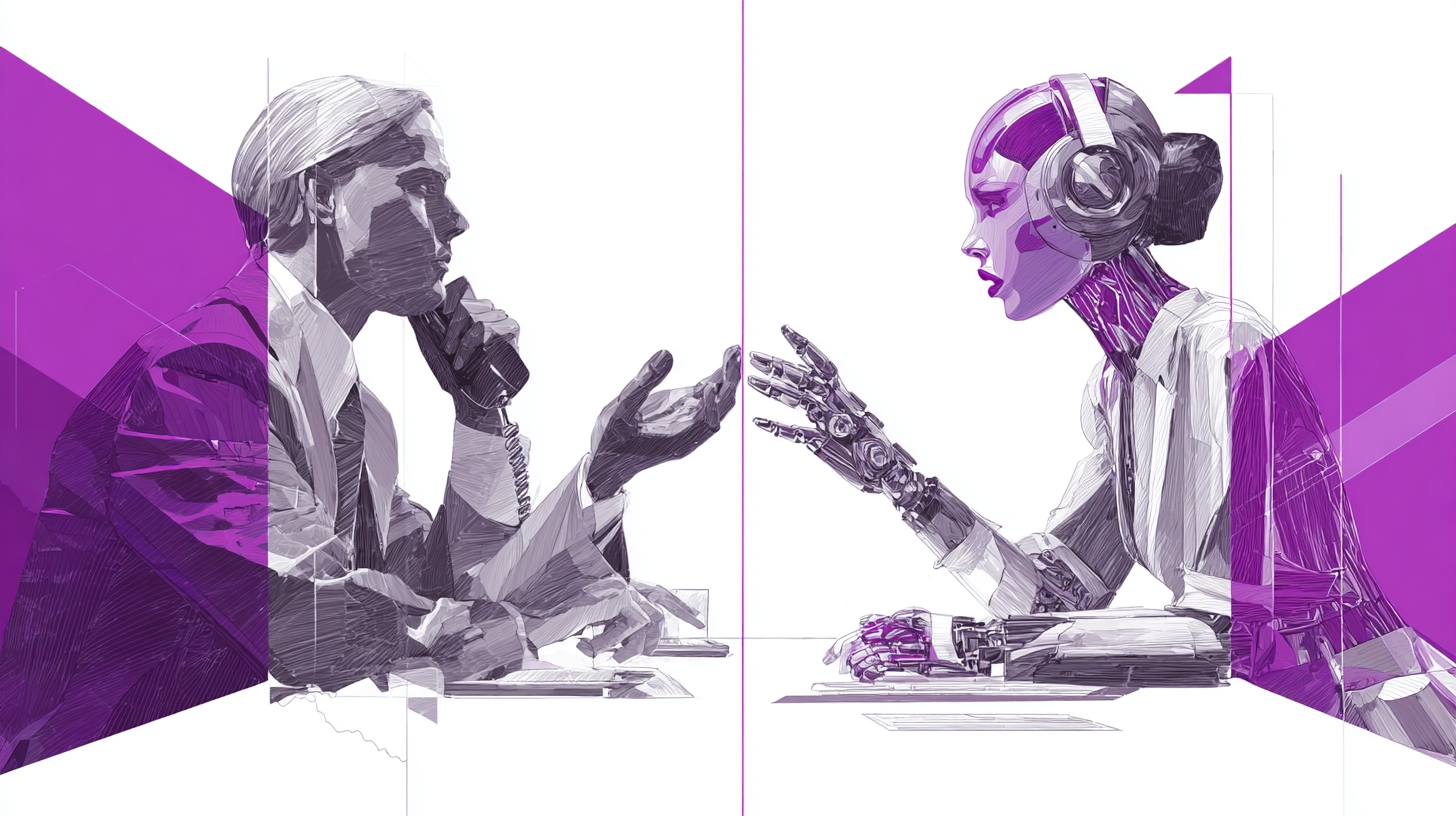
A human SDR costs your company $88,000 to $125,000 per year, fully loaded. They take 3-6 months to ramp. And according to Bridge Group's 2025 SaaS Sales Metrics report, the average SDR tenure is just 18 months before they leave or get promoted.
An AI SDR costs $500 to $2,000 per month. It's operational in 1-2 weeks. And it never puts in its two weeks' notice.
But the comparison isn't that simple. AI SDRs are exceptional at some things and terrible at others. Hiring the wrong one (human or AI) for the wrong job is the fastest way to waste money on sales development.
I've built AI SDR systems for B2B companies and worked alongside human SDR teams. This comparison is based on real numbers and real experience, not vendor marketing.
Key takeaways: AI SDRs cost 75-90% less than human SDRs and handle 10-20x the outreach volume. But human SDRs still outperform AI on complex conversations, objection handling, and relationship building. The best B2B sales teams in 2026 use both: AI for top-of-funnel prospecting and outreach, humans for mid-funnel qualification and closing. For most SMBs without a dedicated sales team, an AI SDR is the better starting point.
Table of Contents
- What Is an AI SDR?
- The Full Cost Comparison
- Performance: Head to Head
- Where AI SDRs Win
- Where Human SDRs Win
- The Hybrid Model: How to Use Both
- Decision Framework: Which Should You Choose?
- FAQ: AI SDR vs Human SDR
What Is an AI SDR?
An AI SDR is an artificial intelligence system that performs the core functions of a Sales Development Representative: identifying prospects, conducting outreach, managing follow-ups, and qualifying leads for your sales team. Unlike a human SDR who manually researches and contacts prospects, an AI SDR automates these tasks using machine learning, natural language processing, and data enrichment.
For a complete overview of how these systems work, read AI Agents for B2B Lead Generation: The Complete Guide.
The distinction that matters: an AI SDR is not an email blast tool. Modern AI SDRs research prospects, write unique messages based on that research, adapt their approach based on engagement, and route qualified leads to your CRM with full context. They operate more like a junior SDR with perfect memory and unlimited stamina than a marketing automation sequence.
The Full Cost Comparison
This is the comparison most people get wrong. They compare the software fee to the salary and call it a day. The real math includes everything.
Human SDR: True Cost of Ownership
| Cost Component | Annual Cost |
|---|---|
| Base salary | $65,000-$85,000 |
| Commission/bonus (on-target) | $15,000-$30,000 |
| Benefits (health, 401k, PTO) | $15,000-$25,000 |
| Payroll taxes | $6,000-$9,000 |
| Tools and software (CRM, prospecting, email) | $5,000-$10,000 |
| Management overhead (% of manager's time) | $8,000-$15,000 |
| Recruiting cost (amortized over tenure) | $5,000-$8,000 |
| Training and onboarding | $3,000-$5,000 |
| Office/equipment | $2,000-$5,000 |
| Total fully loaded cost | $124,000-$192,000 |
And that's per SDR. If they leave after 18 months (the industry average), you absorb recruiting and ramp costs all over again.
AI SDR: True Cost of Ownership
| Cost Component | Annual Cost |
|---|---|
| AI SDR platform/tools | $2,400-$24,000 |
| Data providers (contact enrichment) | $1,200-$6,000 |
| Email infrastructure (domains, warmup) | $600-$1,800 |
| CRM integration (usually included) | $0-$1,200 |
| Consultant setup fee (one-time, amortized) | $2,000-$5,000 |
| Ongoing optimization (2-4 hours/month) | $0-$3,600 |
| Total first-year cost | $6,200-$41,600 |
| Total year 2+ cost | $4,200-$36,600 |
The one-time setup cost disappears after year one. And the AI never asks for a raise.
Side-by-Side Cost Summary
| Metric | Human SDR | AI SDR |
|---|---|---|
| Annual cost (fully loaded) | $124,000-$192,000 | $6,200-$41,600 |
| Monthly cost | $10,300-$16,000 | $520-$3,470 |
| Cost per email sent | $2.50-$5.00 | $0.02-$0.10 |
| Cost per qualified meeting | $800-$1,600 | $50-$200 |
| Breakeven timeline | 3-6 months (ramp) | 2-4 weeks |
Performance: Head to Head
Cost is only half the equation. Here's how they compare on the metrics that actually matter.
| Performance Metric | Human SDR | AI SDR |
|---|---|---|
| Emails per day | 50-80 | 500-1,000+ |
| Personalization depth | High (when motivated) | High (when configured well) |
| Follow-up consistency | Inconsistent (human nature) | 100% consistent |
| Response time to inbound | Minutes to hours | Seconds |
| Working hours | 8-10 hrs/day, 5 days/week | 24/7/365 |
| Qualified meetings/month | 10-15 | 20-40 |
| Ramp time | 3-6 months | 1-2 weeks |
| Turnover risk | High (18-month avg tenure) | None |
| A/B testing capability | Manual, slow | Automated, continuous |
| Multi-channel coordination | Limited bandwidth | Simultaneous |
According to Salesforce's 2025 State of Sales report, 83% of sales teams using AI agents report measurable improvements in pipeline generation. B2B companies with AI-assisted sales see a 120% increase in qualified leads and a 28% increase in conversion rates.
Key insight: That 120% increase in qualified leads is not just about volume. AI SDRs generate more meetings because they never miss a follow-up, respond to inbound interest within seconds, and test messaging variations automatically. The consistency alone accounts for a significant share of the improvement.
Where AI SDRs Win
1. Volume and Consistency
A human SDR has good days and bad days. An AI SDR sends the same number of personalized messages on Monday at 7am as it does on Friday at 11pm.
- The consistency advantage of AI SDRsA human SDR has good days and bad days. On a Monday after a long weekend, output drops. On a Friday afternoon, it drops more. An AI SDR sends the same number of personalized messages on Monday at 7am as it does on Friday at 11pm. It never calls in sick. It never has an off week.
For companies that need to fill the top of the funnel with volume, this consistency is transformative.
2. Speed to Value
Hiring a human SDR is a 3-6 month investment before you see full productivity. You need to recruit (4-8 weeks), onboard (2-4 weeks), train on the product (2-4 weeks), and then wait for them to build pipeline (4-8 weeks).
An AI SDR can be configured and sending personalized outreach within 1-2 weeks. The bottleneck is email warmup (2-3 weeks), not capability.
3. Cost Efficiency at Scale
If you need to 3x your outreach volume, hiring three more human SDRs triples your cost. Scaling an AI SDR system might increase your monthly spend by 20-30%. The marginal cost of more outreach from an AI system is almost zero.
4. Data Capture and Optimization
Every interaction an AI SDR has gets logged, measured, and analyzed automatically. Which subject lines get opens? Which messaging angles get replies? Which ICP segments convert? AI SDRs generate this data by default and can automatically optimize based on it.
A human SDR can tell you what they think works. An AI SDR shows you what actually works, with data to back it up.
5. Multi-Channel Coordination
An AI SDR can send a LinkedIn connection request, follow up with an email two days later, engage with the prospect's social content, and then send a second email with a different angle. All automated, all tracked, all personalized. A dedicated email marketing agent can take this even further by optimizing your email sequences based on engagement patterns. A human SDR technically can do this, but the coordination overhead means most stick to one or two channels.
Where Human SDRs Win
1. Complex Objection Handling
"We're already working with a competitor." "I'm not sure this would work for our specific industry." "We had a bad experience with AI tools before."
These responses require empathy, creative thinking, and the ability to read between the lines. A human SDR who understands your product deeply can turn an objection into a meeting. An AI SDR, even a good one, follows pre-defined response patterns. It can handle common objections, but it breaks down on unusual or emotionally charged responses.
2. Relationship Building
B2B sales at higher ACVs depend on trust. A human SDR who builds genuine rapport with a prospect, remembers details about their company, and engages authentically over time creates a relationship that an AI cannot replicate. For enterprise deals with long sales cycles, this human element is not optional.
3. Strategic Conversations
When a prospect asks "How would this work for our specific tech stack?" or "Can you walk me through how Company X uses your product?", a human SDR with deep product knowledge can have a meaningful conversation. An AI SDR can provide scripted responses, but it cannot navigate a freeform strategic discussion.
4. Brand Representation
For some markets and price points, buyers expect to talk to a person. If you're selling $100K+ enterprise contracts, having a human SDR as the first touchpoint signals that you take the relationship seriously. An AI SDR, no matter how good, doesn't carry the same weight in high-touch sales environments.
Key insight: Human SDRs are essential when your average contract value exceeds $50,000 and sales cycles run longer than 6 months. In these high-ACV, complex sales environments, the trust and nuance a human brings to early conversations directly impacts close rates. If your buyers expect a relationship before they sign, AI alone will not get you there.
5. Judgment in Edge Cases
A human SDR might notice that a prospect's LinkedIn post mentions they just closed a funding round and decide to adjust their approach accordingly. Or they might recognize that a prospect is a former customer and flag it for special handling. AI SDRs are getting better at this, but human judgment in ambiguous situations is still superior.
The Hybrid Model: How to Use Both
The smartest B2B sales teams in 2026 don't choose one or the other. They use AI SDRs and human SDRs together, each handling what they do best.
- The case for the hybrid modelThe smartest B2B sales teams in 2026 don't choose one or the other. They use AI SDRs and human SDRs together, each handling what they do best.
How the Hybrid Model Works
AI SDR handles top-of-funnel: - Prospect identification and enrichment - Initial outreach (personalized emails, LinkedIn requests) - Follow-up sequences - Basic response classification - Meeting booking for clearly qualified leads
Human SDR handles mid-funnel: - Complex objection handling - Warm follow-up with engaged prospects - Strategic discovery conversations - Relationship nurturing for high-value targets - Handoff to account executives
The handoff point: When a prospect responds with genuine interest or a complex question, the AI SDR routes them to a human with full context: every previous interaction, company research, and engagement signals.
The Numbers on Hybrid
A hybrid model typically looks like this:
| Metric | SDR-Only | AI-Only | Hybrid |
|---|---|---|---|
| Monthly cost | $10,000-$16,000 | $520-$3,470 | $6,000-$12,000 |
| Qualified meetings/month | 10-15 | 20-40 | 30-50 |
| Cost per meeting | $800-$1,600 | $50-$200 | $150-$350 |
| Close rate on meetings | 25-35% | 15-25% | 25-35% |
| Revenue impact | Baseline | 1.5-2x | 2-3x |
The hybrid model costs less than a full human SDR team while producing 2-3x the output. The AI handles volume. The human handles quality. Together, they cover the entire funnel. Pairing this with a conversion optimization agent ensures every stage of your funnel is performing at its peak.
Decision Framework: Which Should You Choose?
Use this framework based on your situation:
Choose AI SDR if:
- You're an SMB without any dedicated sales development
- Your ACV is $2,000-$25,000 (high enough to justify outbound, low enough that volume matters)
- You need results in weeks, not months
- Budget is tight but pipeline is critical
- Your sale is relatively straightforward with a defined ICP
Choose Human SDR if:
- Your ACV is $50,000+ and sales cycles are 6+ months
- Your product requires deep technical explanation before meetings
- You're selling into a small, well-defined market where every relationship matters
- Your brand positioning depends on high-touch, white-glove service
Choose Hybrid if:
- You have at least one human SDR or AE who can handle warm leads
- You want to scale pipeline without linearly scaling headcount
- Your ICP spans multiple segments with different complexity levels
- You want data-driven optimization of your entire outbound process
Bottom line: For most B2B companies with $5K-$50K ACV, the hybrid model delivers the best ROI. Start with an AI SDR to build pipeline volume, then add human touchpoints where conversion data shows they make a difference. If you have no sales team today, start with AI. If you already have SDRs, layer AI on top to multiply their output.
For most B2B companies with $5K-$50K ACV, the hybrid model delivers the best results. Start with an AI agent system for lead generation and add human touchpoints where the data shows they're needed.
FAQ: AI SDR vs Human SDR
Is an AI SDR cheaper than a human SDR?
Yes, by 75-90%. An AI SDR costs $500-$2,000 per month for software and infrastructure. A human SDR costs $88,000-$125,000+ per year fully loaded (salary, benefits, tools, management, recruiting). The cost per qualified meeting is typically $50-$200 for an AI SDR compared to $800-$1,600 for a human SDR.
Can an AI SDR replace a human SDR completely?
Not in most cases. AI SDRs handle prospecting, initial outreach, follow-ups, and basic qualification extremely well. But they struggle with complex objection handling, relationship building, and nuanced conversations that require emotional intelligence. The best approach for most B2B companies is AI for top-of-funnel, humans for mid-funnel.
How many leads can an AI SDR generate compared to a human?
A human SDR typically sends 50-80 personalized emails per day. An AI SDR can send 500-1,000+ personalized emails per day across multiple channels. In qualified meetings, a strong human SDR averages 10-15 per month. A properly configured AI SDR can generate 20-40 qualified meetings per month depending on ICP specificity and market size.
How long does it take to ramp an AI SDR vs a human SDR?
A human SDR takes 3-6 months to fully ramp. An AI SDR can be operational within 1-2 weeks, including ICP setup, email warmup, and CRM integration. For a walkthrough of the setup process, read How to Set Up Your First AI Sales Agent.
What are the risks of using an AI SDR?
The main risks are poor personalization from bad configuration, deliverability issues from improper email setup, brand damage from untargeted outreach, and over-reliance on automation without human oversight. All of these are preventable with proper setup. Read AI Agent Mistakes: 7 Setup Errors That Kill Your Results for what to avoid.
Make the Right Choice for Your Sales Team
The AI SDR vs human SDR debate isn't really about choosing one over the other. It's about understanding what each does best and deploying them accordingly.
If you're running outbound manually or not running it at all, an AI SDR system is the fastest, most cost-effective way to start generating pipeline. If you already have a sales team, adding AI SDRs can 2-3x their output without 2-3x the cost.
Either way, the math is clear. The question is how to set it up right for your specific situation.
I'll analyze your current sales development process, recommend the right AI-human balance, and build a system tailored to your ICP. Most setups are operational within one week.
You may also like